
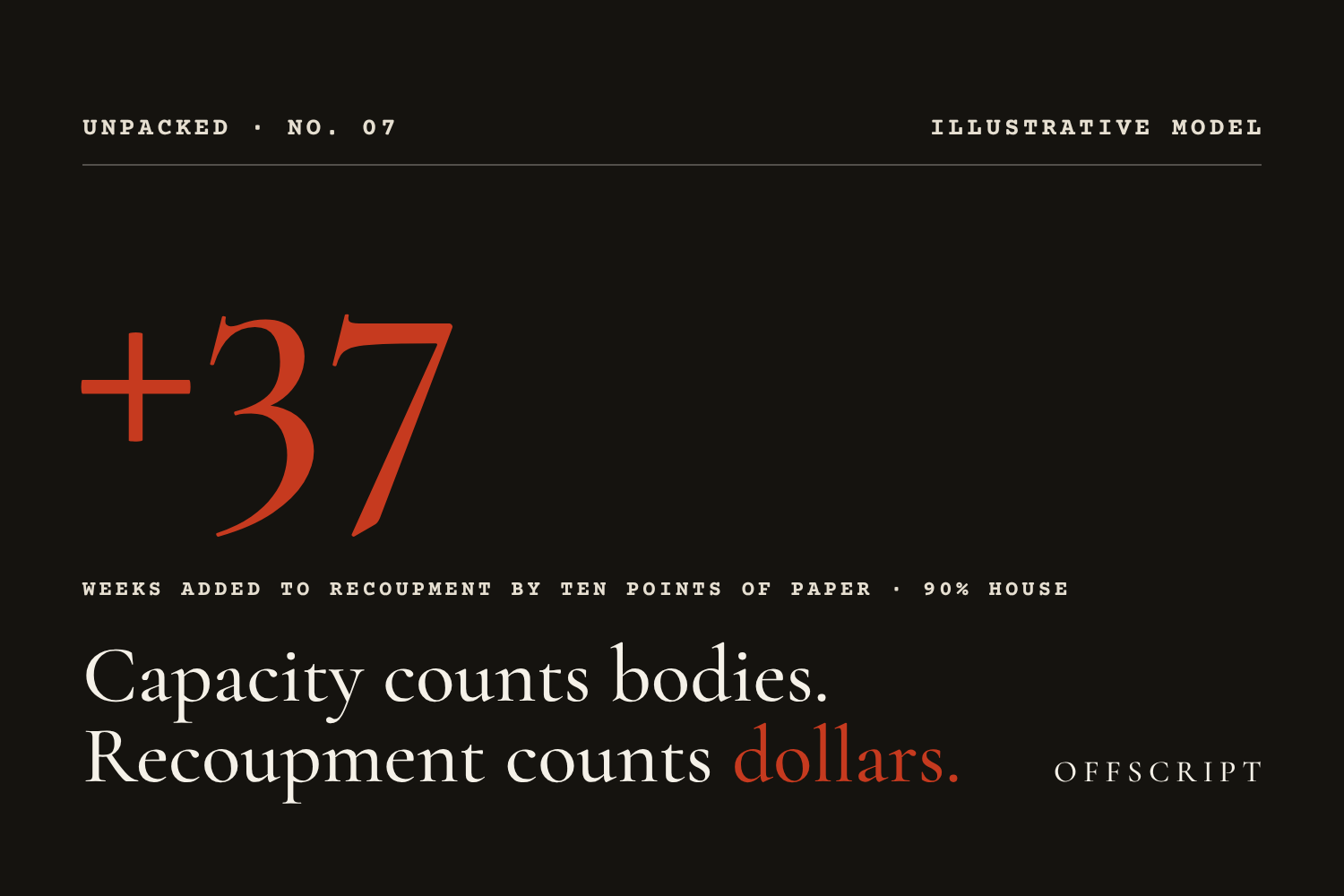
Capacity counts bodies. Recoupment counts dollars
Unpacked 07. A complimentary ticket raises capacity and lowers the average, and the public table has counted comps in attendance since 2009. What a seat given away does to the weeks a show needs to recoup, how to spot it on the public table, and five things to ask for.
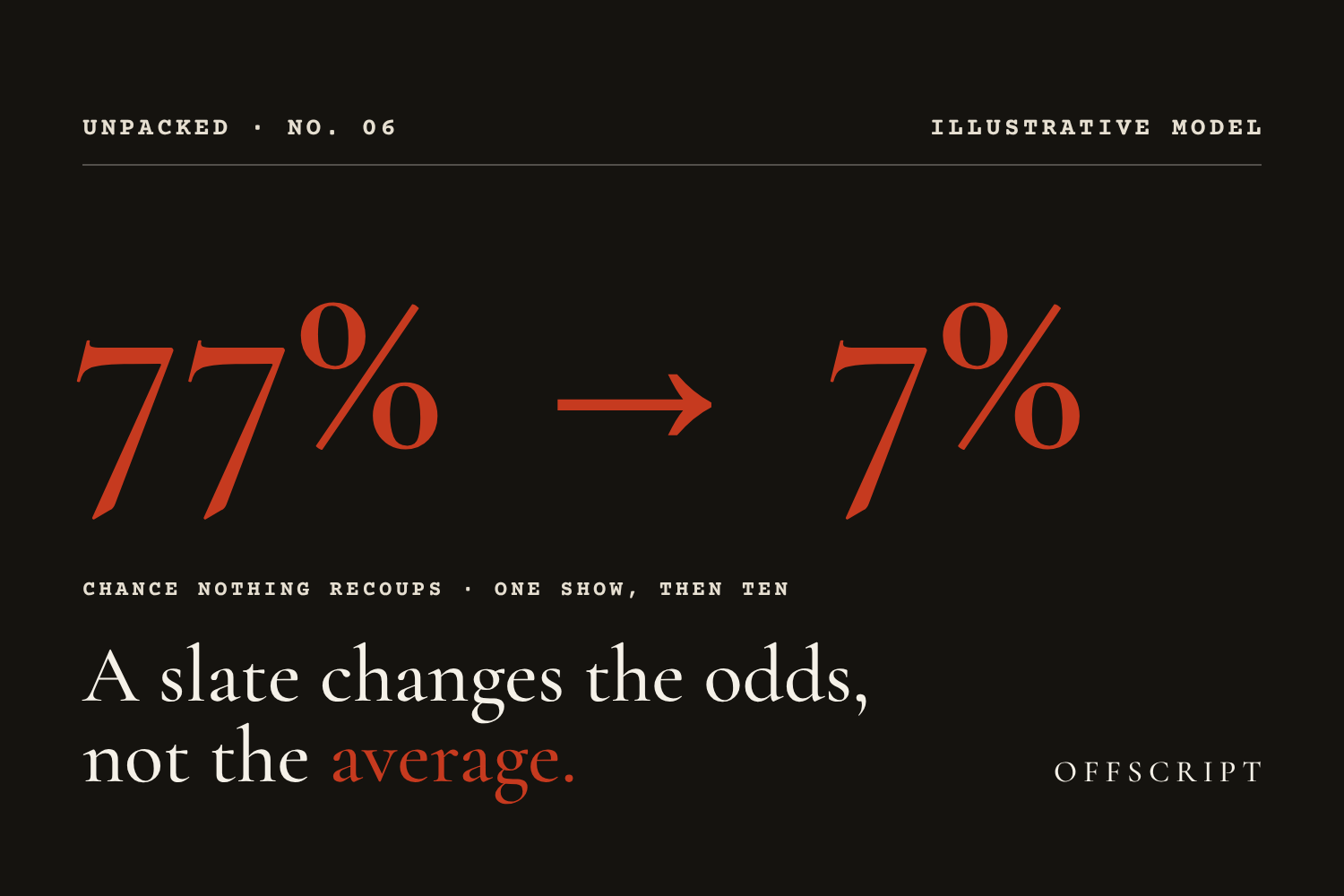
A slate changes the odds, not the average
Unpacked 06. One show or a slate: what spreading money across productions changes, what it can’t, and what a fund layer costs. Ten illustrative shows at the published recoupment rates, and the questions to ask before anyone spreads your money for you.

Investors pay first. They get paid last.
Unpacked 05. A Broadway show settles up every week in a line, and the paperwork decides who stands where: the theatre, the payroll, the fees, the royalty pool, then the investors. What the pool changed, what the fees cost, and what to ask for before you sign.
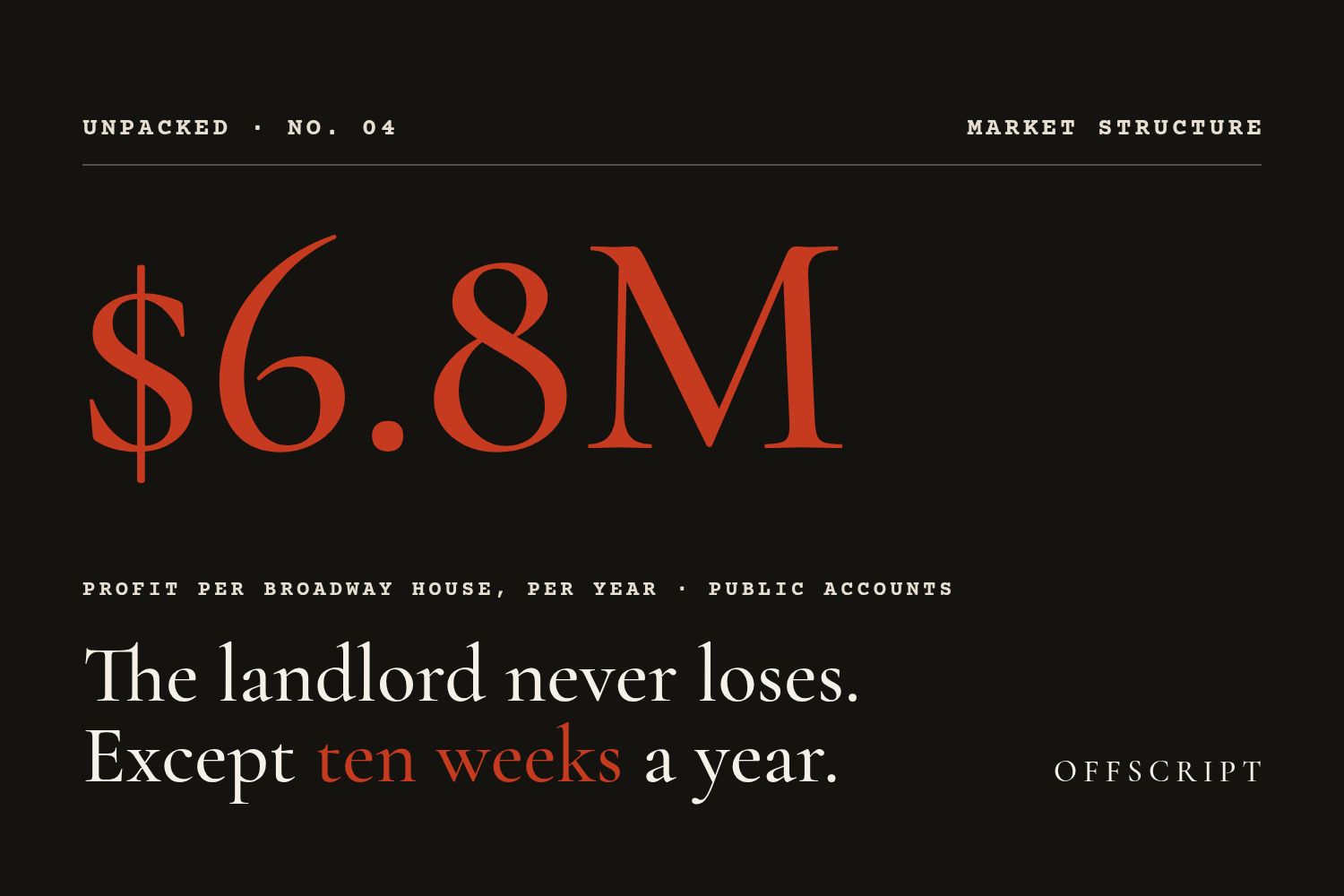
The landlord never loses. Except ten weeks a year.
Unpacked 04. There are 41 Broadway houses by law, and the one that has published its numbers earned $6.8 million a house. What a theater earns, what it costs to own, who carries the risk, and four deals that would share it, tested on the model.
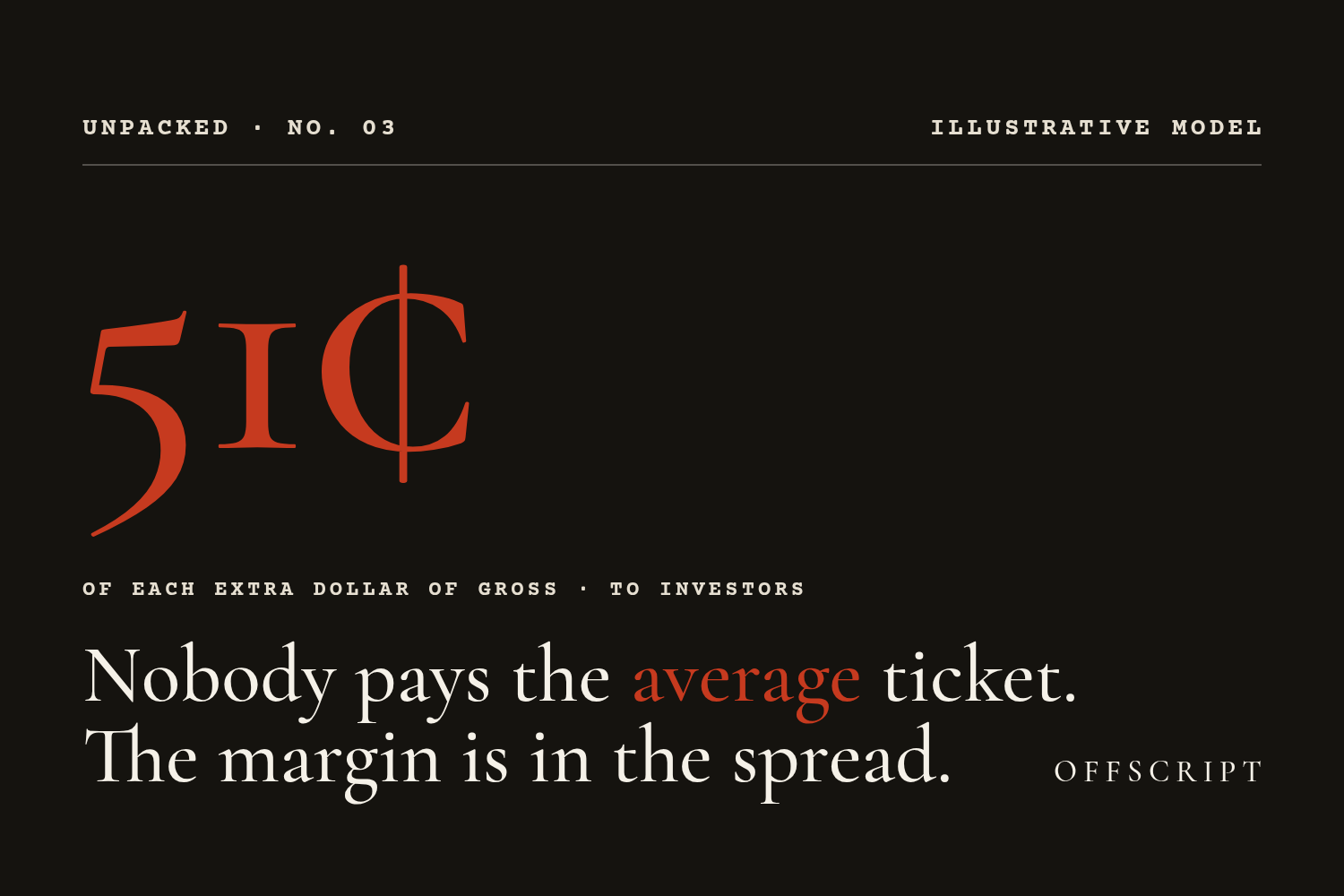
Nobody pays the average ticket. The margin is in the spread.
Unpacked 03. Nobody pays the average ticket: a show sells some seats well above it and some well below, and the margin that repays investors lives in that spread. What a premium seat, a rush seat and a discount code each do to the money that reaches them, on one hypothetical musical, with the questions to ask about the price ladder.
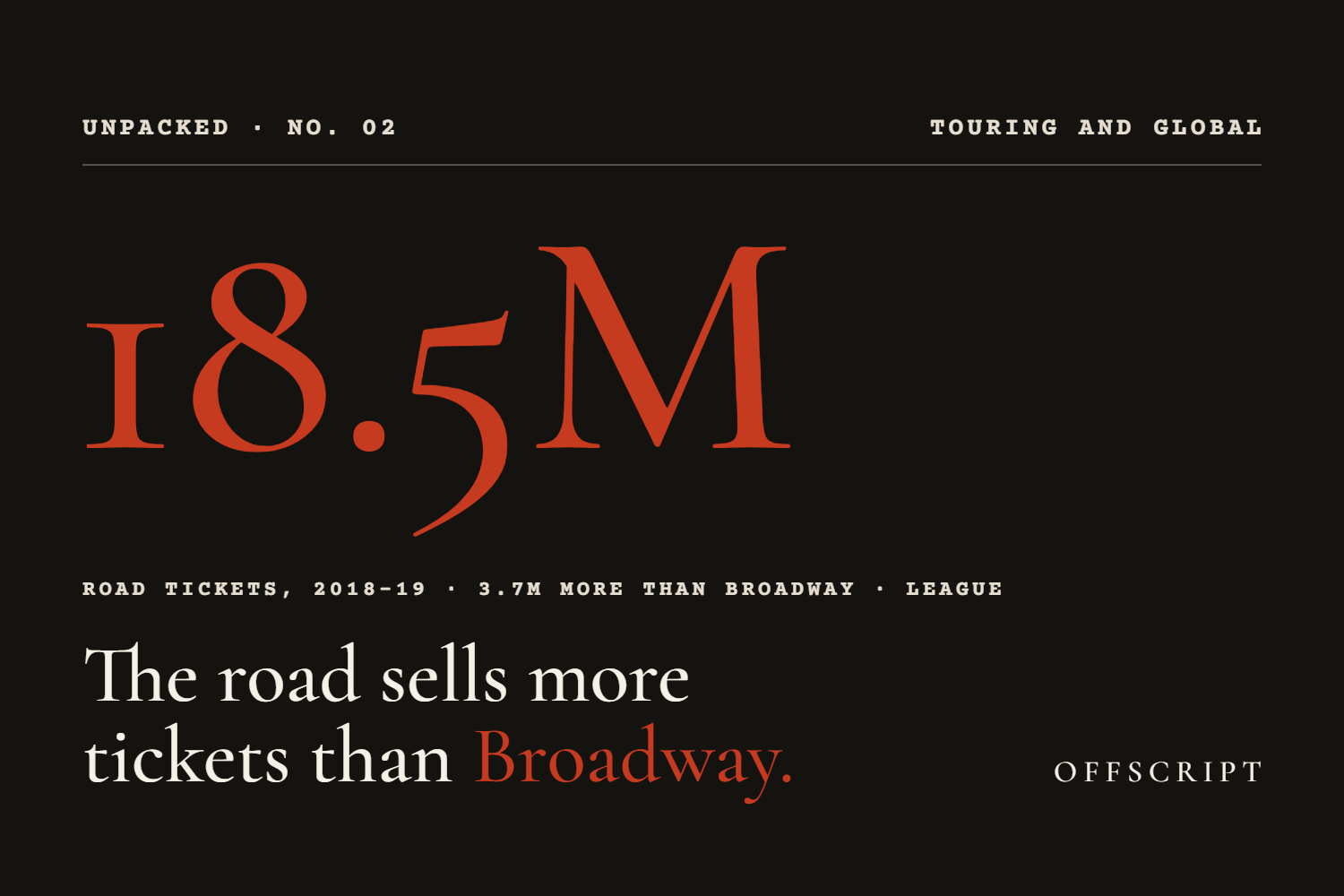
First class, second class, worldwide. How a Broadway show makes money on the road
Unpacked 02. The road sold 18.5 million tickets the last time anyone counted, and that left out every non-Equity tour. What first class, second class and worldwide mean, how a touring week is paid, and why the long non-Equity tours are worth more to the business than they get credit for.

A 13% price cut can take 86% off a show’s weekly profit
Unpacked 01. The trades report what a show grossed; investors are paid from what’s left, and most of the costs in between don’t move. This week’s price cut, run through an illustrative $20M musical, and the four numbers to track instead of gross.